
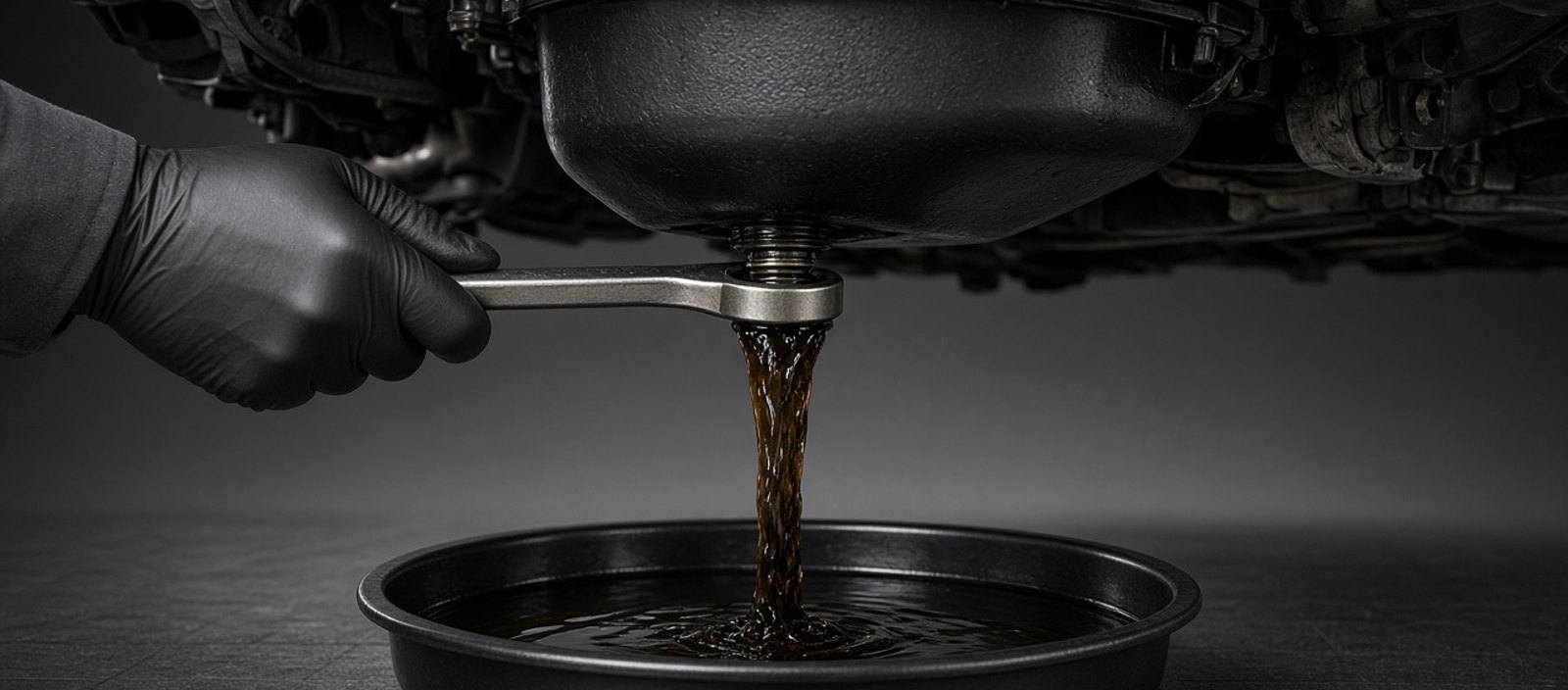
How to change your own oil: inline-four, V6 and V8
7 min read
Tools, safety, finding the drain plug and filter on the three most common engine layouts, and getting rid of the old oil.
Changing your own oil is one of the easiest ways to save money and get to know your car. Fresh oil lubricates the engine's moving parts, carries heat away and holds contaminants until the filter catches them, as MotorTools puts it. The basic job is the same on almost every engine: drain the old oil, replace the filter, put the drain plug back, and refill.
What changes from car to car is where things are and what the engine needs. That's why every guide we checked, from AMSOIL to Haynes to MotorTools, starts in the same place: your owner's manual.
Before you start: check the manual
Look up four things for your exact engine before you buy anything: the oil specification (viscosity, such as 5W-30, plus any API, ACEA or manufacturer approval), the oil capacity with a filter change, the correct filter, and the drain plug torque and washer type. MotorTools warns against generic advice like "all cars take 5W-30." We're deliberately not listing capacities or torque figures here, because they vary by engine and the wrong number can cause damage.
MotorTools also suggests buying a little more oil than the stated capacity, so you have enough to top up after checking the level.
Tools and parts
- The correct oil and a new filter for your engine (from the manual)
- A new drain plug washer or crush washer, if your car uses one
- Socket or box-end wrench for the drain plug, and an oil filter wrench
- Torque wrench, if the manual lists a drain plug or filter-housing torque
- Drain pan large enough for all the old oil, plus a funnel
- Jack, jack stands and wheel chocks, or drive-on ramps
- Gloves, safety glasses and shop rags
- A sealable container for the old oil
Engine layouts: where to look
Every engine layout has an oil pan (sump) at the bottom of the engine with a drain plug, but where the plug and filter sit varies by car. AutoZone says the drain plug is typically toward the rear of the oil pan at the bottom, and the filter is either a metal spin-on canister that threads on under the car or on the side of the engine, or a paper cartridge inside a housing, often under the hood. AMSOIL notes that some vehicles have two drain plugs. Many cars also have a plastic undershield that has to come off first, which Haynes mentions refitting at the end.
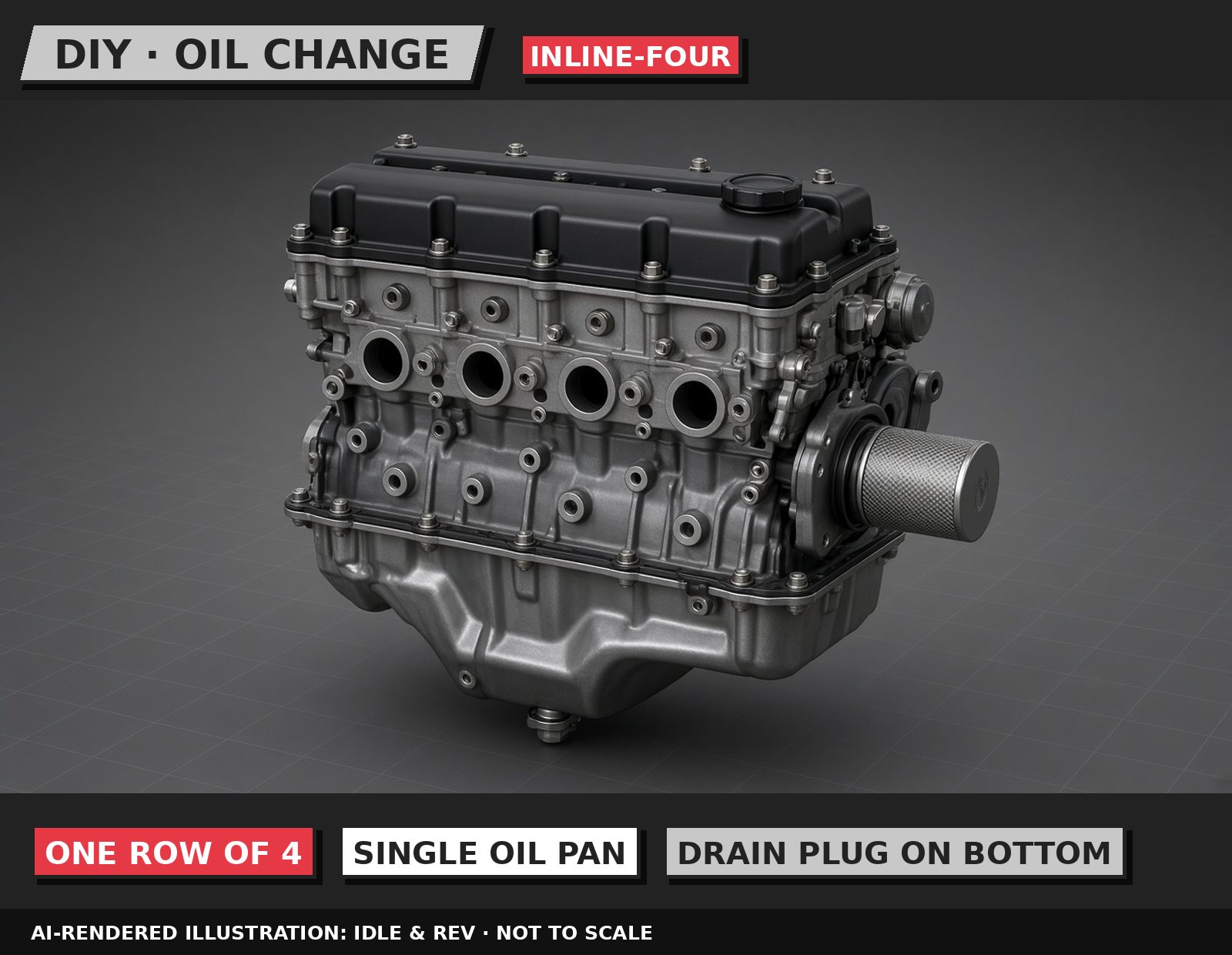
Inline-four: all four cylinders sit in one row, so the engine and its oil pan are relatively narrow. On many front-drive cars the engine sits sideways in the engine bay. Find the single pan at the lowest point of the engine and the drain plug on its bottom or low on its side; then trace the block to find the filter or the cartridge housing on top.
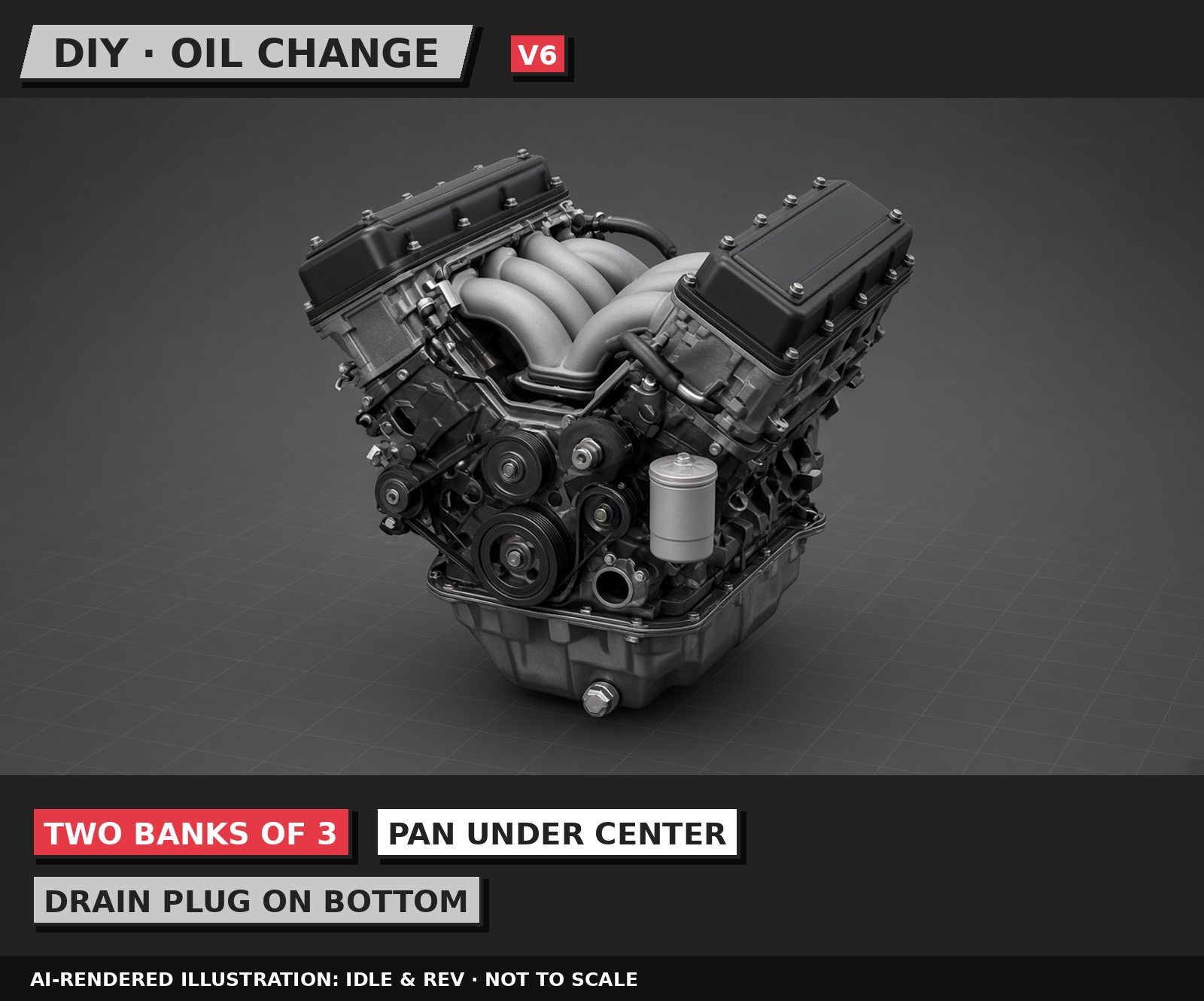
V6: the cylinders are split into two banks of three in a V. The pan still sits under the center of the engine, but V6 engines are often packed tightly into the engine bay, so the filter can be hard to reach from below and some use a top-mounted cartridge housing. Check the manual for the location before you lift the car, so you know whether you'll be working from above, below or both.
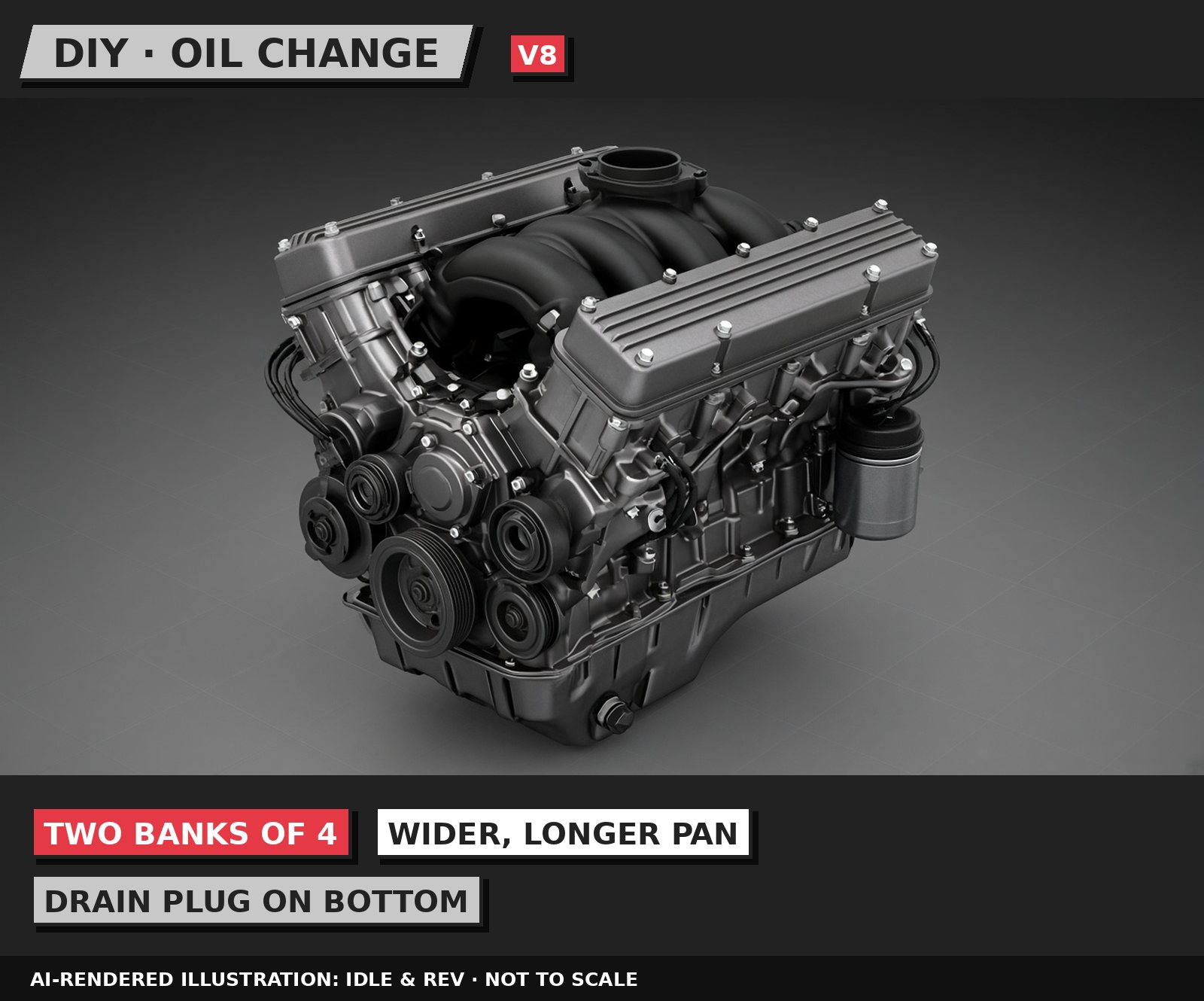
V8: two banks of four, with a wider, longer oil pan and usually more oil to drain, so make sure your drain pan can hold the full amount, as AMSOIL advises. Truck and rear-drive V8s often have more room underneath, but the filter location still varies, so confirm it in the manual. If your engine has two drain plugs, drain both.
Step by step
- Warm up, park level and chock the wheelsRun the engine briefly so the oil flows more easily, then shut it off. Park on level, solid ground, set the parking brake and chock the wheels that stay on the ground. Haynes recommends chocking the rear wheels before raising the front.

Illustration: Idle & Rev (AI-rendered, for illustration; not to scale) - Lift the car and support it on jack standsRaise the car at the jack points shown in your owner's manual, then lower it onto jack stands placed at the manual's support points, or drive it onto ramps. Never work under a car held only by a jack.
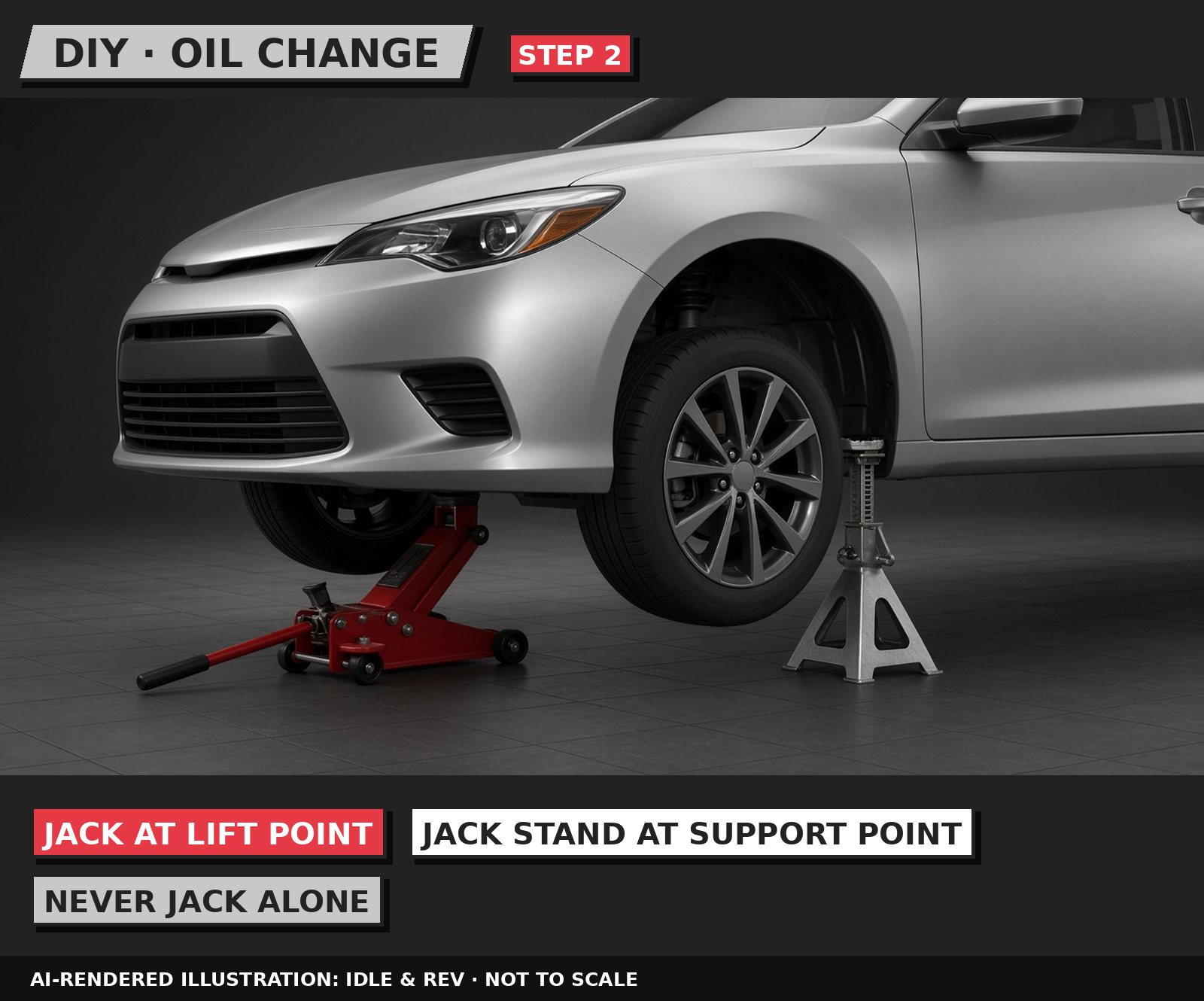
Illustration: Idle & Rev (AI-rendered, for illustration; not to scale) - Find the drain plug and position the panLocate the drain plug at the bottom of the oil pan (and a second one if your engine has it). Set the drain pan under it, a little offset toward where the oil will stream out.
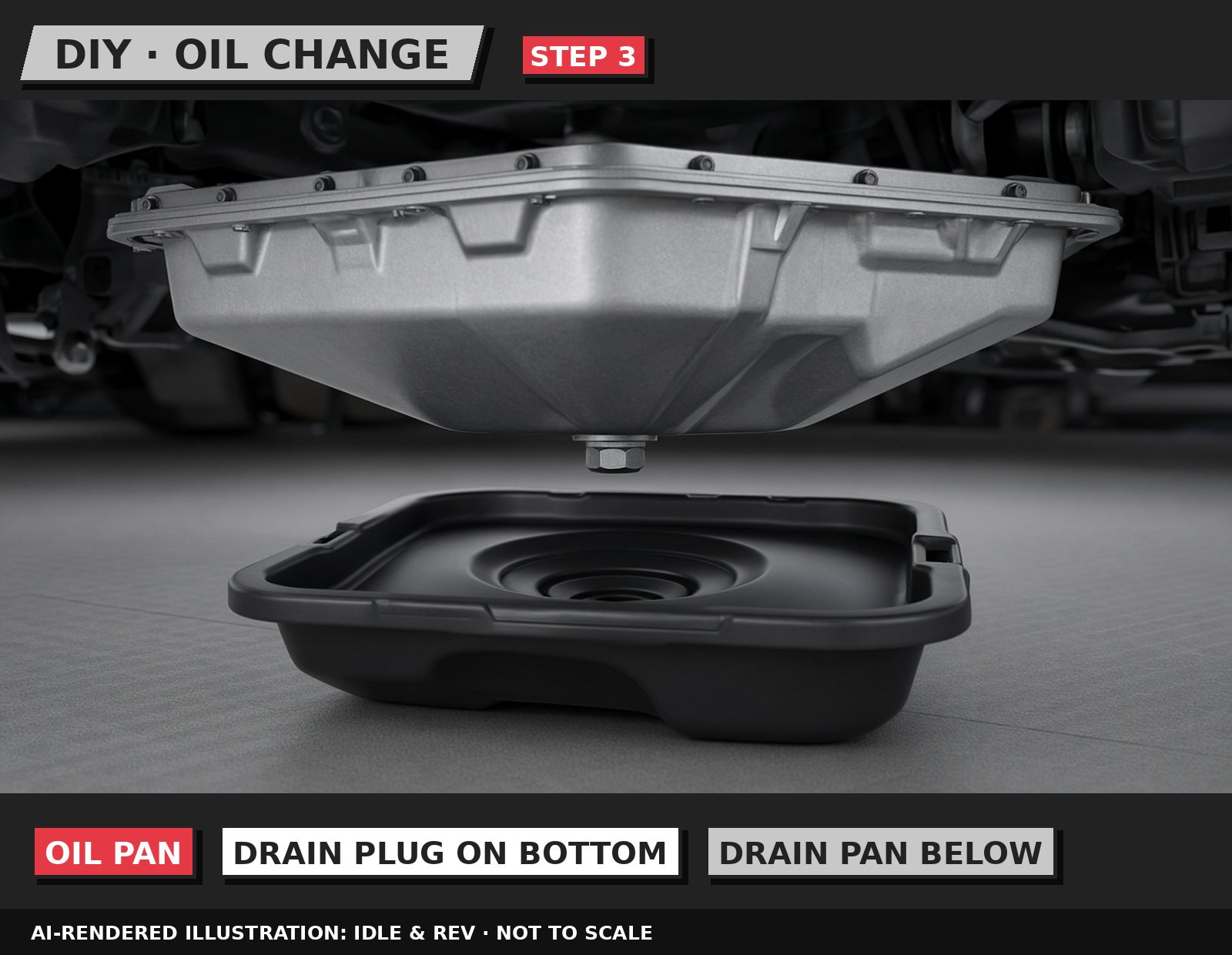
Illustration: Idle & Rev (AI-rendered, for illustration; not to scale) - Remove the drain plug and drain the oilLoosen the plug counterclockwise with your wrench. Haynes suggests finishing the last threads by hand and pulling the plug away quickly so warm oil doesn't run up your sleeve. Let it drain completely, which takes several minutes.
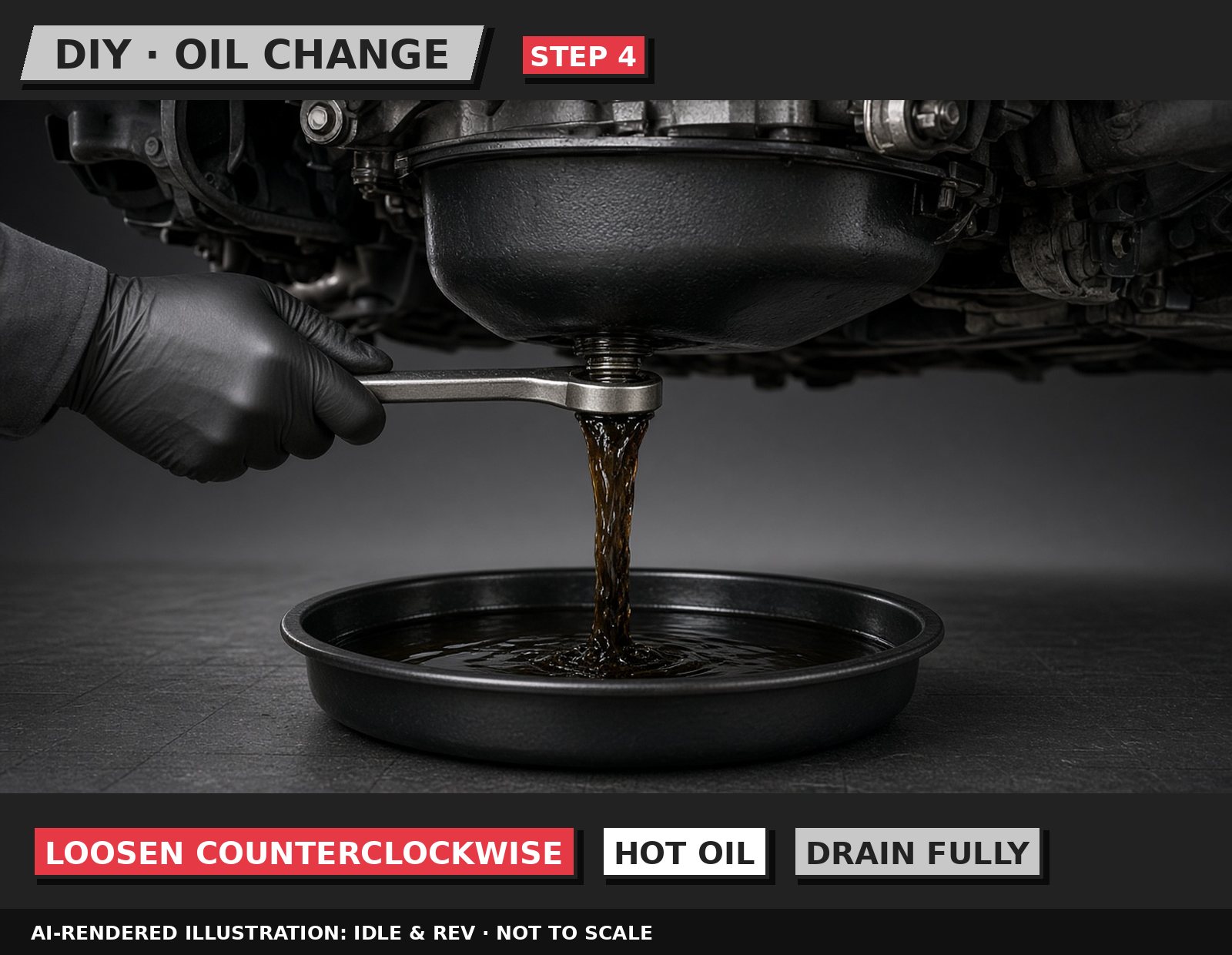
Illustration: Idle & Rev (AI-rendered, for illustration; not to scale) - Remove the old filterUse an oil filter wrench to unscrew a spin-on filter, or open the housing and pull out the cartridge. AutoZone advises making sure the old filter's gasket came off with it, since it can stick to the mounting surface. Clean the mounting surface.
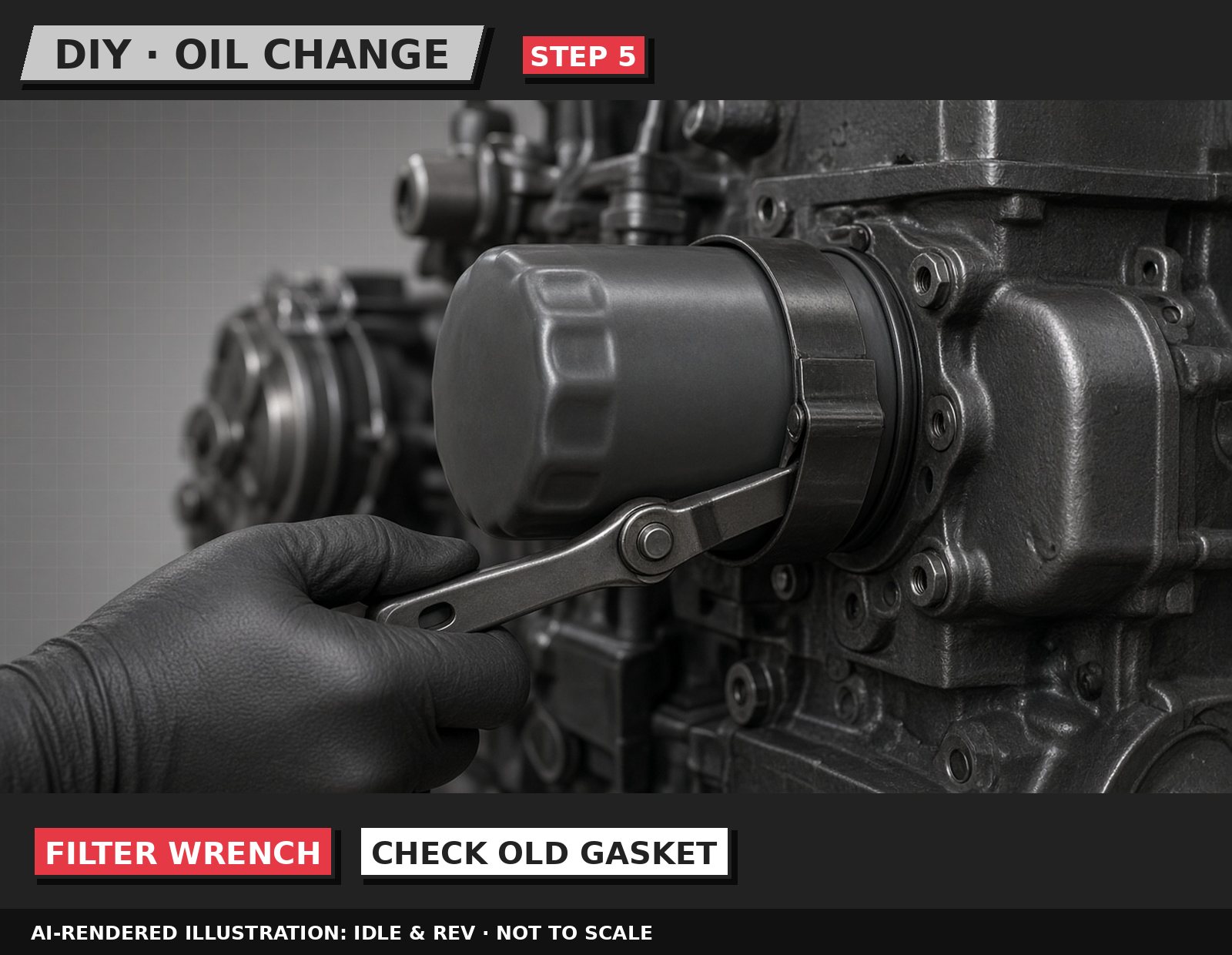
Illustration: Idle & Rev (AI-rendered, for illustration; not to scale) - Install the new filterFor a spin-on filter, smear a little fresh oil on the new gasket and screw it on until snug by hand. Haynes warns that overtightening can damage the seal and cause a leak. For a cartridge, fit new O-rings and tighten the housing to the specified torque.
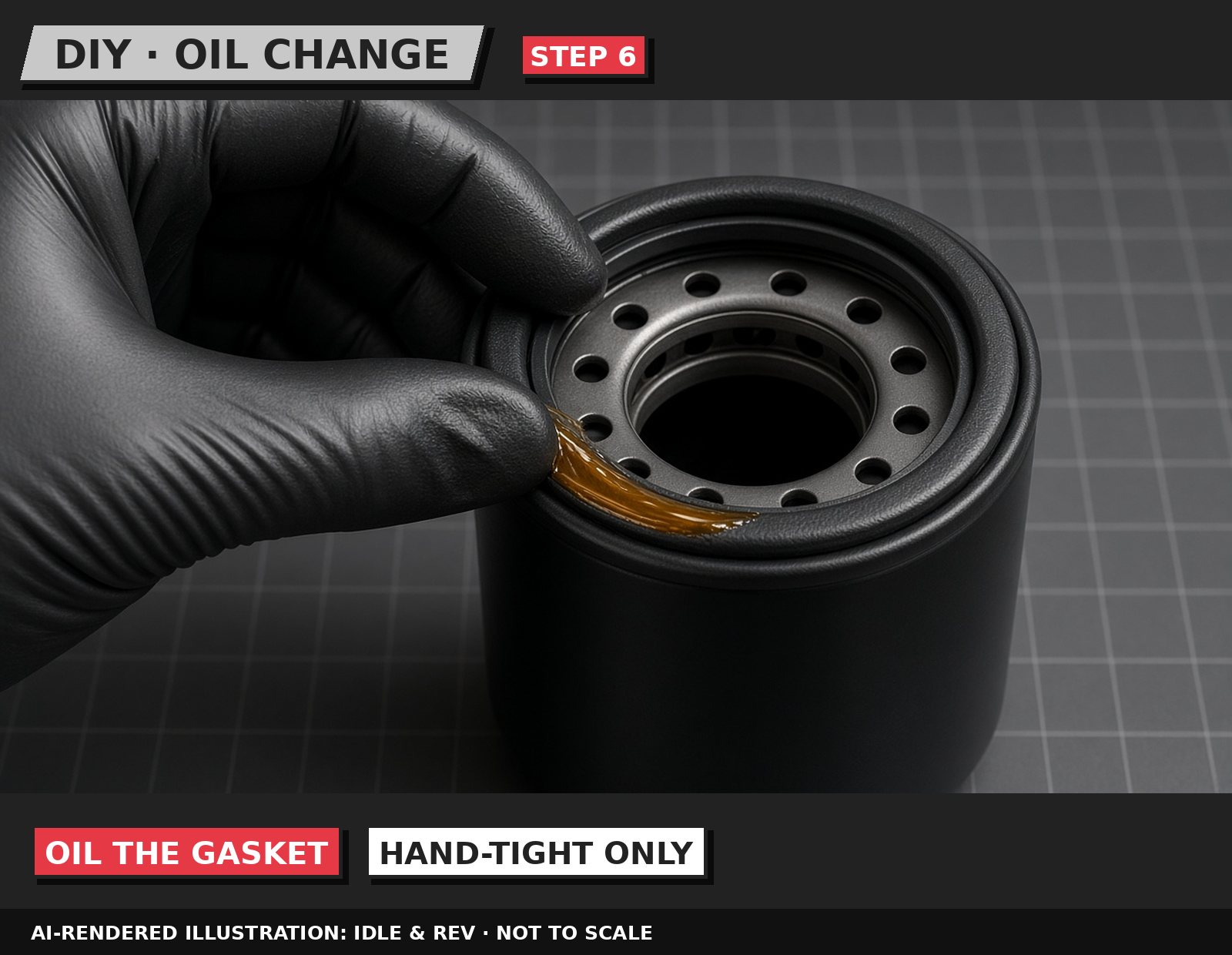
Illustration: Idle & Rev (AI-rendered, for illustration; not to scale) - Refit the drain plug to the correct torqueWipe the plug and the opening clean, fit a new washer if required, and thread it in by hand. Then tighten it with a torque wrench to the figure in your manual. MotorTools notes reused washers are a common cause of leaks.
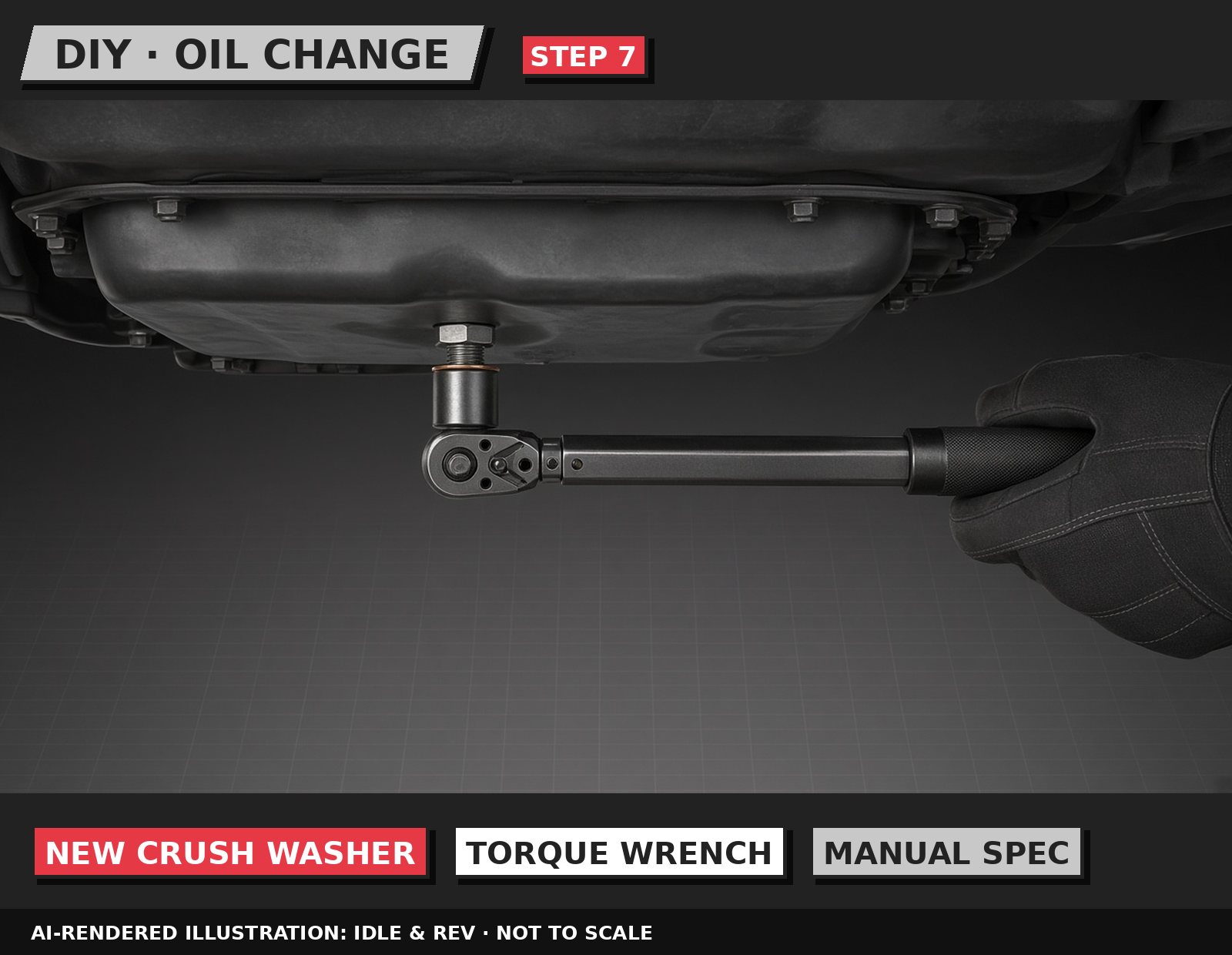
Illustration: Idle & Rev (AI-rendered, for illustration; not to scale) - Refill and check the levelLower the car. Add most of the specified oil through the filler cap with a funnel, wait a few minutes, check the dipstick (or follow your car's electronic level procedure) and top up as needed. Start the engine briefly, check for leaks at the plug and filter, then shut off and recheck the level.
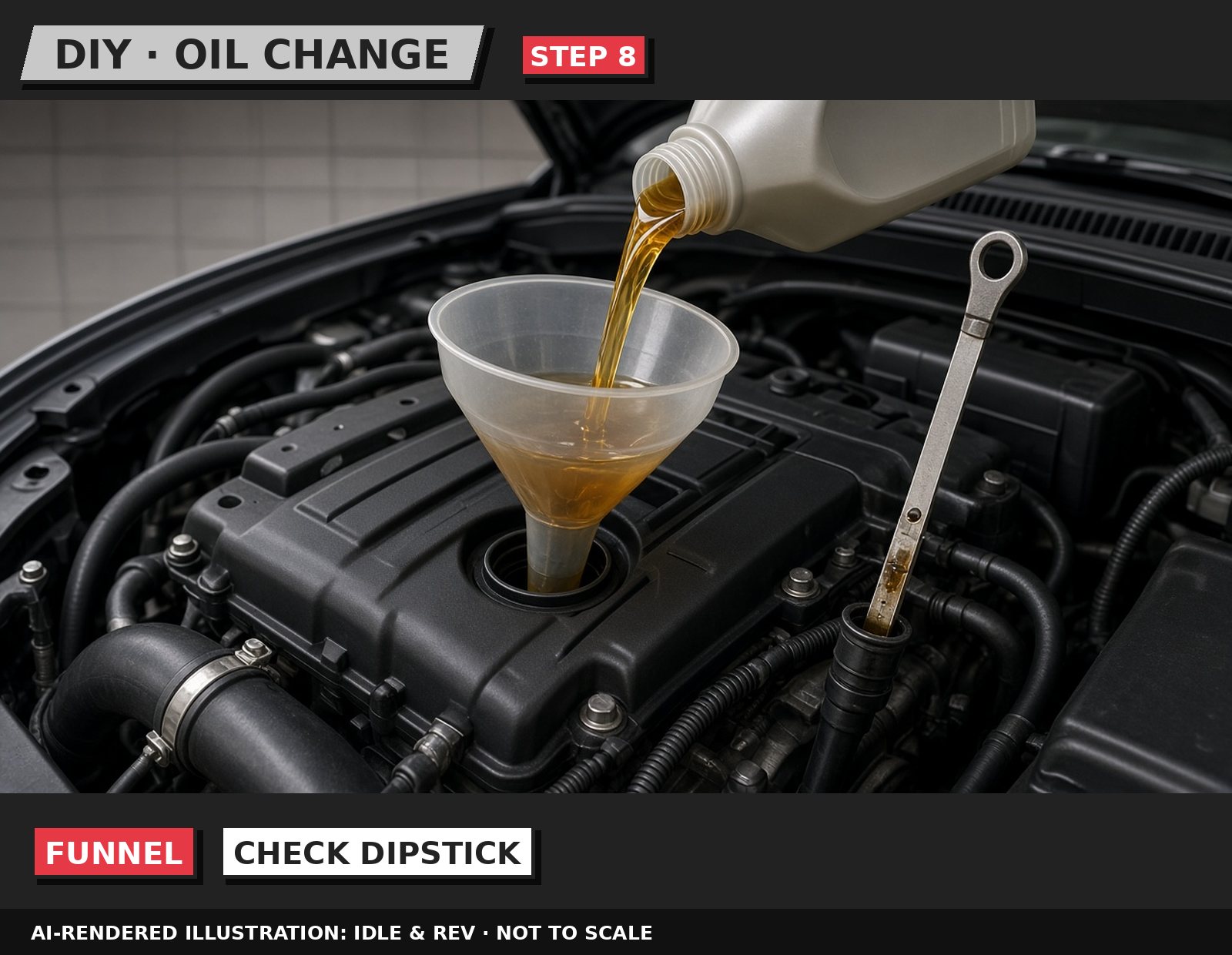
Illustration: Idle & Rev (AI-rendered, for illustration; not to scale) - Store and recycle the old oil and filterPour the old oil into a sealable, leak-proof container. Take it and the drained filter to a used-oil collection site. Reset the oil service reminder if your car has one.
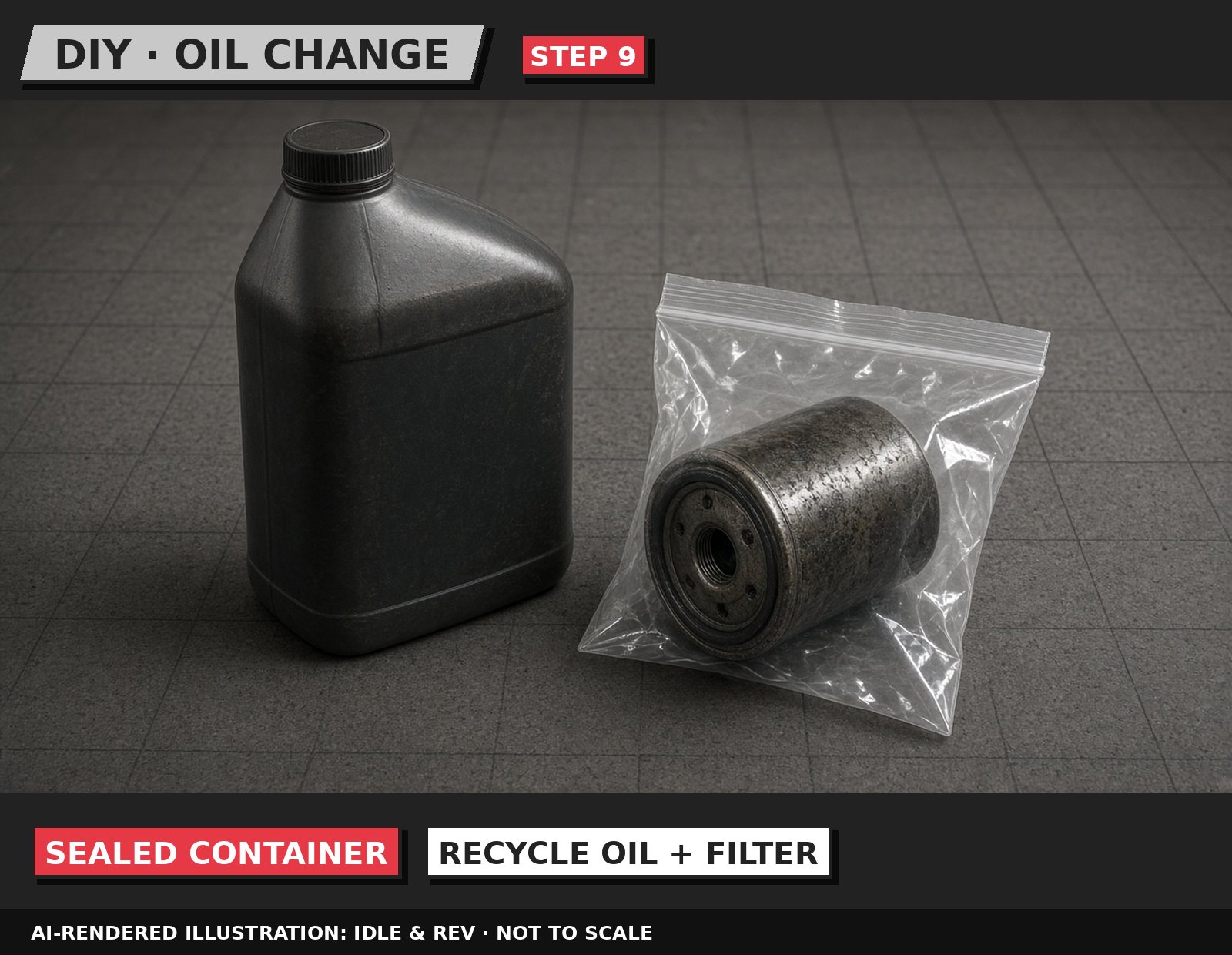
Illustration: Idle & Rev (AI-rendered, for illustration; not to scale)
Torque cautions
The drain plug threads into the oil pan, which can be soft aluminum on many engines. Overtightening can strip the threads or damage the pan, and MotorTools warns that if a plug is rounded or stuck you should stop rather than force it. Undertightening risks a leak or a lost plug.
Always use the torque figure from your owner's manual or a service manual. AutoZone mentions a ballpark figure but stresses checking your car's specification, and so do we.
Getting rid of the old oil
Never pour used oil down a drain or on the ground. The EPA says the used oil from one oil change can contaminate one million gallons of fresh water.
Used oil can be re-refined into new lubricants or processed into fuel, and the steel in old filters can be recycled, according to the EPA. Many auto parts stores and local collection centers accept used oil and filters; AutoZone says its stores accept old oil.
Sources: AMSOIL: A beginner's guide to changing oil, Haynes: How to change your own oil, AutoZone: How to change your oil, MotorTools: How to change your engine oil, US EPA: Managing, reusing and recycling used oil